The Benefits of
Faith for Skeptics
is for people who don’t believe but still want what faith offers.
Meaning without dogma.
Depth without delusion.
Contentment without illusions.
About
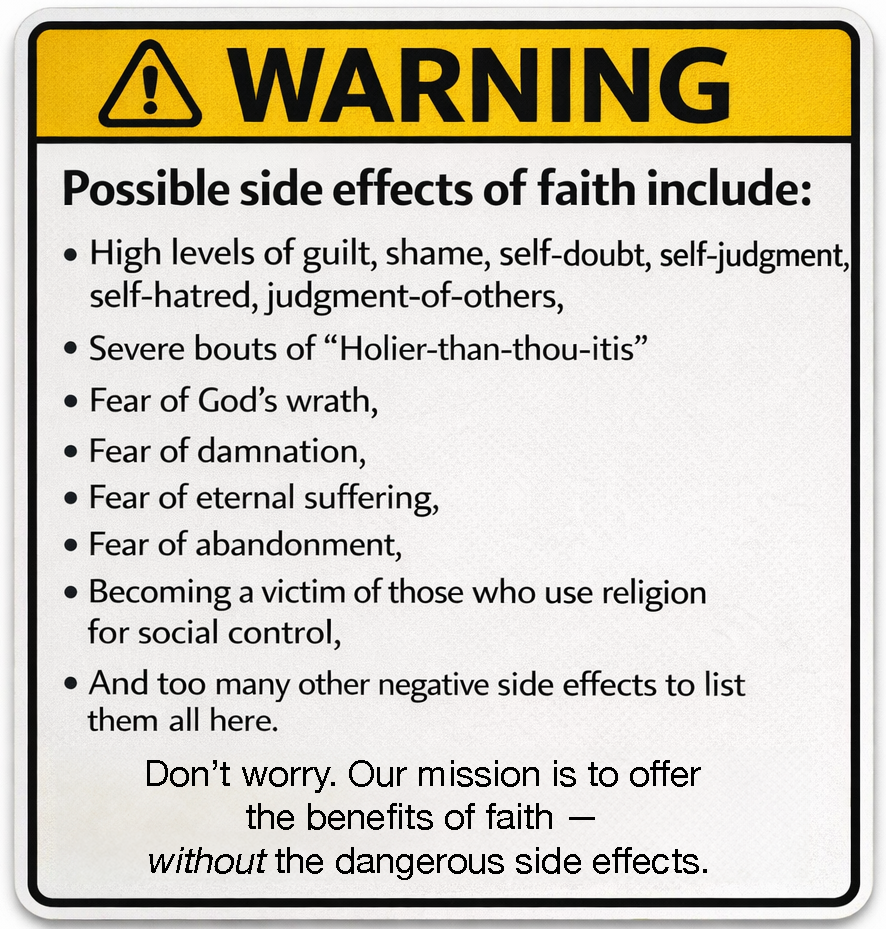
Faith for Skeptics was created for people who still want what faith promises without having to believe in it.
It started with a fundamental question: “Can a skeptic get the benefits of faith—purpose, peace, connection, love, emotional healing—while avoiding the harmful side effects?"
In a world shaped by artificial intelligence, declining religion, rising anxiety, and widespread meaninglessness despite material comfort, more and more people find themselves spiritually homeless. The old answers no longer work, but no satisfying alternatives have replaced them. We are more informed than ever, yet often more anxious, isolated, and exhausted.
Faith for Skeptics does not attempt to revive religion or convince anyone to believe what they cannot honestly accept. Instead, it draws from psychology, philosophy, neuroscience, and lived experience.
This is not about joining anything.
There is no identity to adopt.
No belief system to defend.
Nothing to become.
It is an invitation to live inside the questions rather than solve them.
To stay grounded without pretending to be certain.
To embrace mystery without abandoning reason.
To discover that unknowing is not a failure of intelligence, but a sign of true wisdom.
Faith for Skeptics exists for those who refuse to choose between honesty and meaning—and want a life full of love, purpose, connection, and faith beyond belief.

The Talk
The Benefits of Faith for Skeptics explores: What if you could access the benefits of faith— including an increased sense of meaning, connection, happiness, love, and serenity—no belief required?
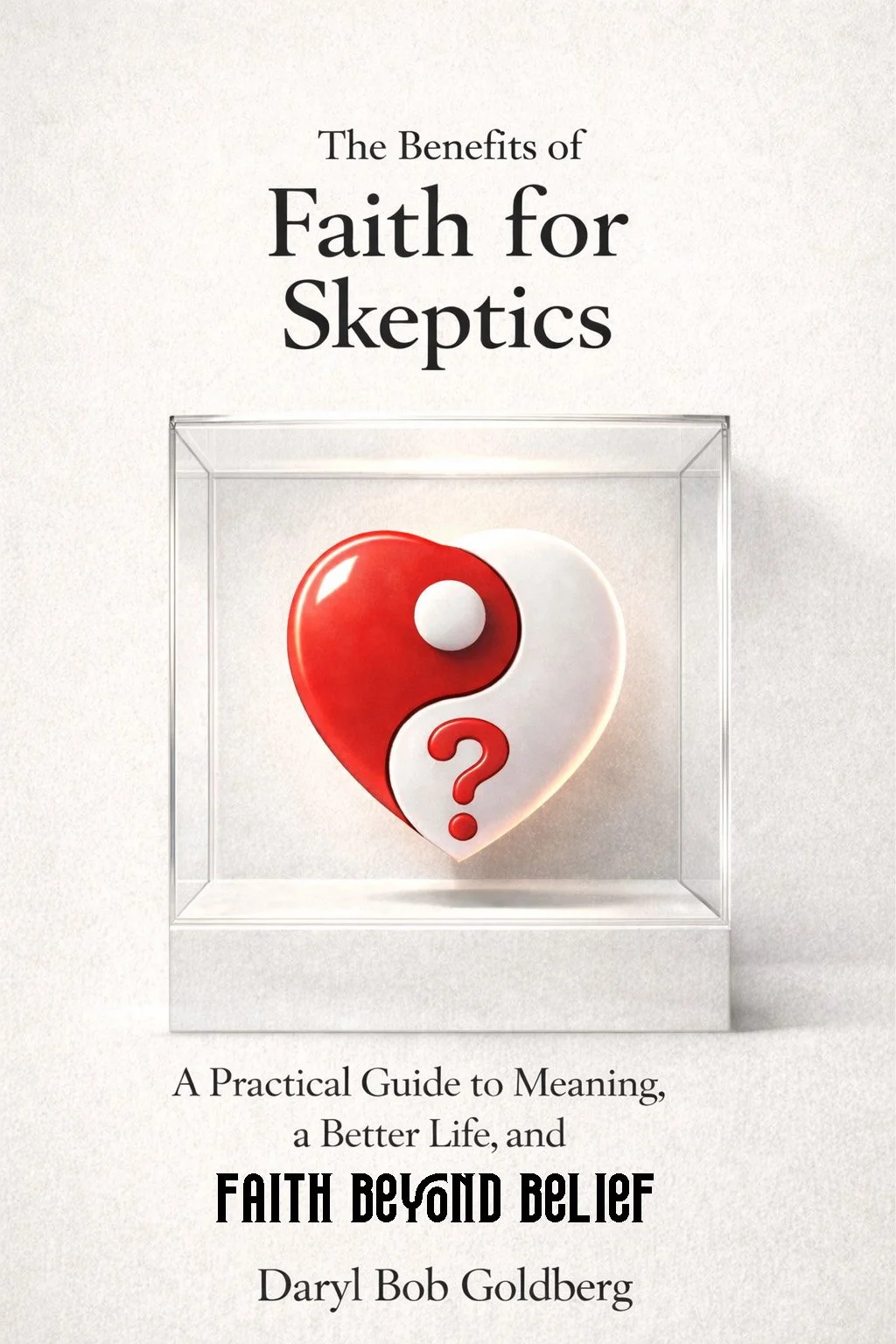

The Book
The Benefits of Faith for Skeptics: The Book is where this project goes all the way.
It is a paradigm-shifting, psychologically grounded, and deeply practical exploration of how to live a meaningful, joyful, and fully empowered life without requiring belief in anything you can’t honestly hold.
Drawing from psychology, neuroscience, philosophy, and lived experience, it challenges the need for certainty, dissolves the search for meaning, and offers a radically different way of relating to life—one that feels grounded, honest, and fully alive.
Rather than offering new beliefs, the book quietly dissolves old assumptions: that spirituality requires dogma, that faith demands intellectual surrender, and that wisdom lives primarily in thought rather than in experience, embodiment, and relationship.
This is not a book about adopting beliefs.
It’s a book about learning how to be.
Coming soon.
Follow us on social